Complete Thyroid Ingredients — Every Dosage, Source and Clinical Fact on the Label
No proprietary blends. No hidden amounts. Complete Thyroid by Science Natural Supplements discloses every ingredient and dosage. Below is the full breakdown — what each compound does, the exact form used, how it compares to clinical research, and what the formula intentionally leaves out.
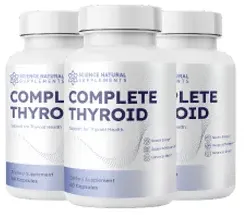
Complete Thyroid Supplement Facts — Full Ingredient Label
Each bottle contains 60 capsules (30 servings). Here is the complete ingredient panel as printed on the label, with bioavailable forms and daily value percentages.
| Ingredient | Amount Per Serving | % Daily Value |
|---|---|---|
| L-Tyrosine Free-form amino acid | 500 mg | † |
| Ashwagandha Root Extract Withania somnifera | 300 mg | † |
| Bladderwrack Fucus vesiculosus — whole plant | 200 mg | † |
| Selenium as Selenomethionine | 200 mcg | 364% |
| Schisandra Berry Extract Schisandra chinensis | 150 mg | † |
| Iodine from Kelp (Ascophyllum nodosum) | 150 mcg | 100% |
| Zinc as Zinc Oxide | 15 mg | 136% |
| Magnesium as Magnesium Oxide | 200 mg | 48% |
| Manganese as Manganese Sulfate | 2 mg | 87% |
| Copper as Copper Gluconate | 2 mg | 222% |
| Vitamin B12 as Cyanocobalamin | 500 mcg | 20,833% |
Selenium (200 mcg as Selenomethionine) — The Thyroid's Most Critical Mineral
Selenium powers the deiodinase enzymes that convert inactive T4 into active T3 — the hormone your cells actually use for energy and metabolism. Without selenium, this conversion bottleneck leaves T4 circulating in your blood while your cells starve for active hormone.
Complete Thyroid uses selenomethionine, the most bioavailable organic form. This matches the form used in clinical thyroid studies, including research on Hashimoto's thyroiditis where 200 mcg daily reduced thyroid antibody levels in patients.
Selenium also functions as a powerful antioxidant for thyroid tissue. The thyroid gland produces more hydrogen peroxide per gram than any other organ during hormone synthesis. Selenium-dependent glutathione peroxidase neutralizes this oxidative stress.
Strong clinical evidence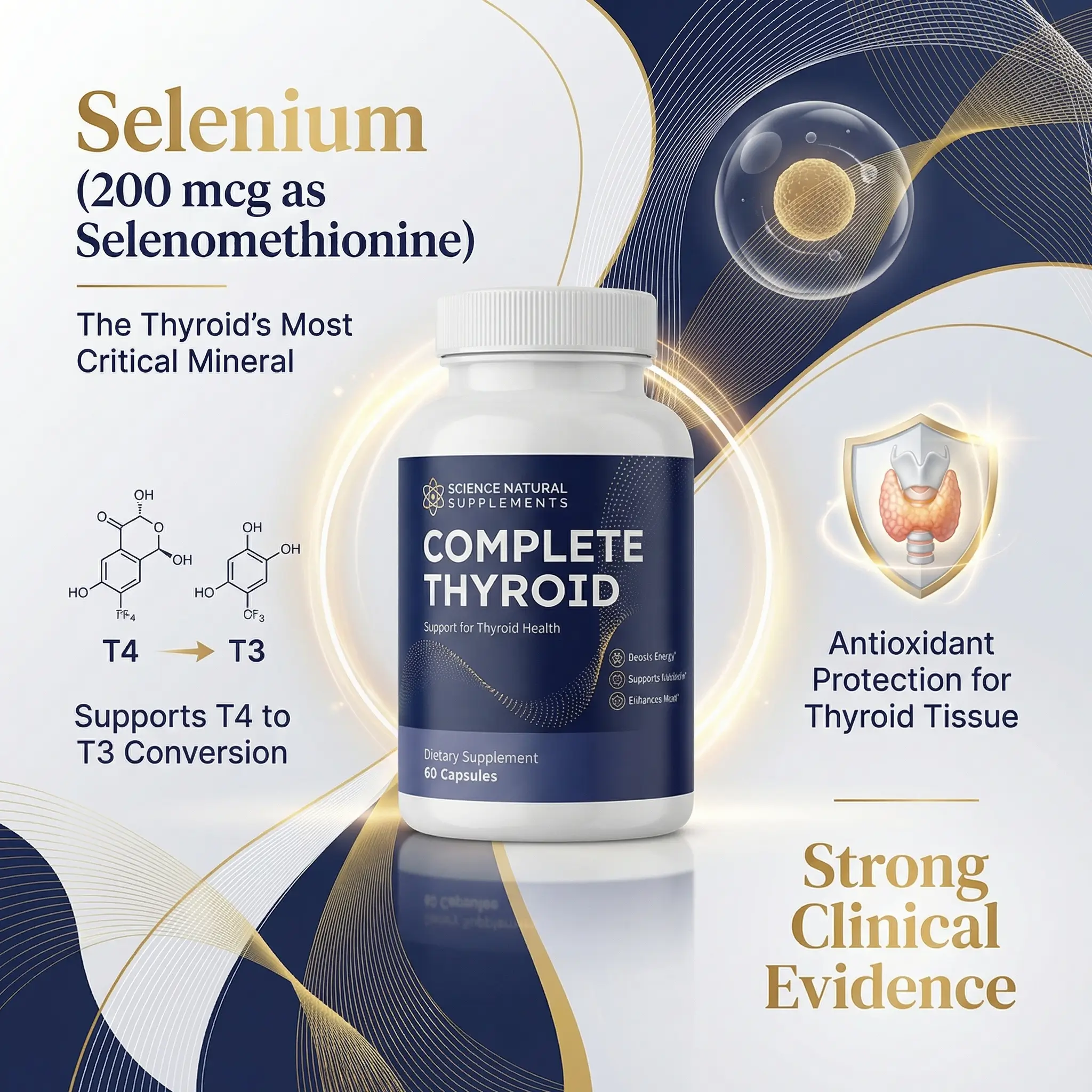
Iodine (150 mcg from Kelp Extract) — The Raw Material for Thyroid Hormone Synthesis
Iodine is the foundational building block of every thyroid hormone molecule. T4 contains four iodine atoms; T3 contains three. Without adequate iodine, hormone production shuts down at the source — no amount of selenium or zinc can compensate.
Complete Thyroid sources iodine from kelp extract (Ascophyllum nodosum), a natural marine source that provides iodine alongside trace minerals found in seaweed. The 150 mcg dose meets 100% of daily requirements without exceeding safe intake thresholds for most adults.
This conservative dosing is deliberate. Excess iodine can paradoxically suppress thyroid function (the Wolff-Chaikoff effect). The formula avoids the aggressive 500–1,000 mcg doses found in some competitors that carry higher risk for those with autoimmune thyroid conditions.
Strong clinical evidence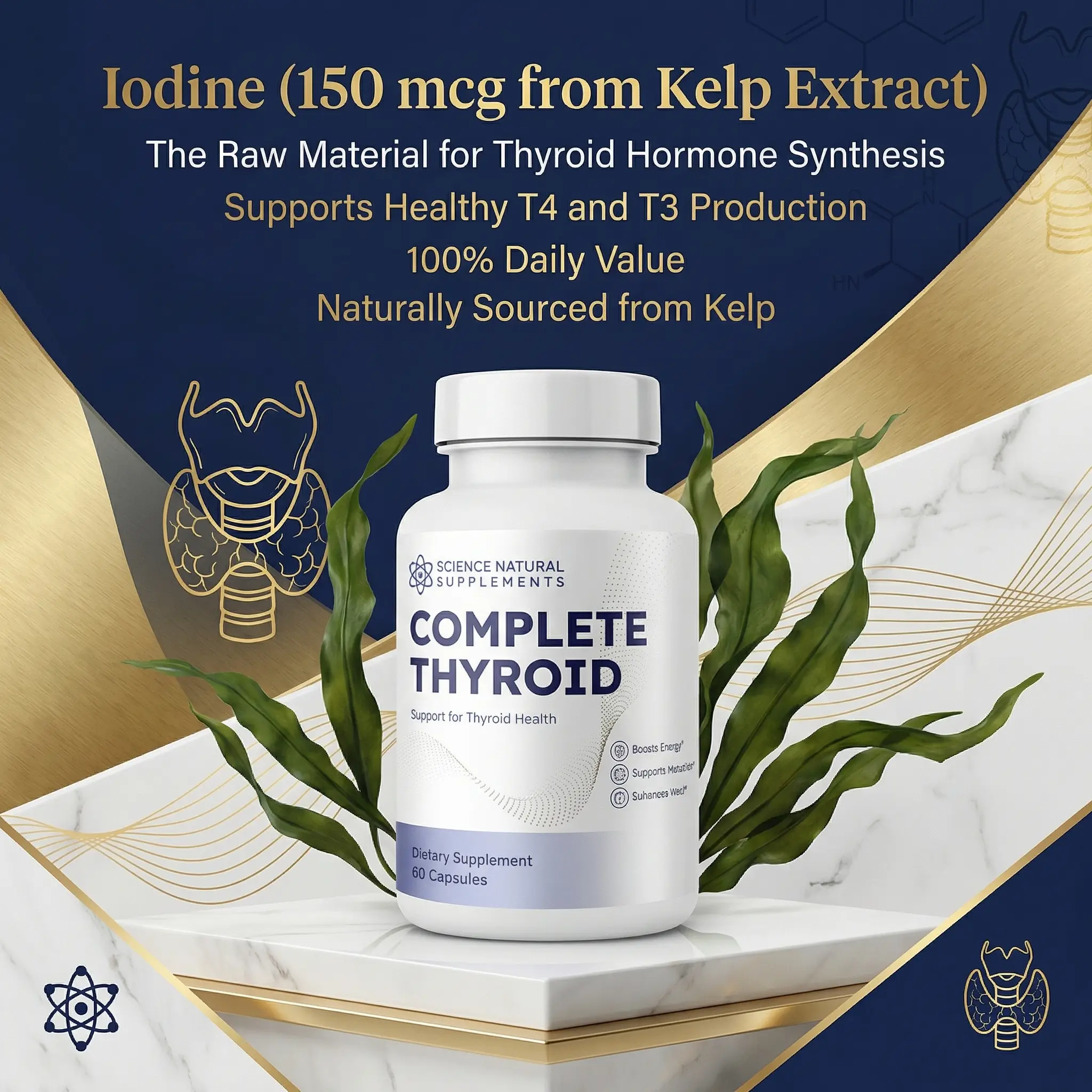
L-Tyrosine (500 mg) — The Amino Acid That Builds Every Thyroid Hormone Molecule
Thyroid hormones are constructed from two components: iodine atoms bonded to the amino acid tyrosine. L-Tyrosine serves as the structural backbone for T3 and T4. Without it, iodine has nothing to attach to — hormone assembly stalls at the molecular level.
The 500 mg dose falls within the clinically studied range for cognitive and thyroid support. L-Tyrosine also serves as a precursor to dopamine and norepinephrine, which contributes to the improved mental focus and motivation users report alongside thyroid improvements.
This ingredient is especially relevant for individuals under chronic stress. Stress depletes tyrosine reserves faster than normal dietary intake can replenish them, creating a secondary bottleneck in hormone production that many thyroid supplements completely ignore.
Moderate clinical evidence for thyroid; strong for cognition
Ashwagandha Root Extract (300 mg) — The Adaptogen That Breaks the Cortisol-Thyroid Cycle
Chronically elevated cortisol suppresses TSH production, which in turn reduces thyroid hormone output. Ashwagandha (Withania somnifera) has been shown to lower serum cortisol while simultaneously supporting T4 levels in subclinical hypothyroid adults.
A frequently cited 8-week study found that 600 mg daily of ashwagandha root extract significantly improved TSH, T3, and T4 levels compared to placebo. Complete Thyroid provides 300 mg — half that study dose — which reflects the formula's role as part of a multi-ingredient approach rather than a standalone adaptogen supplement.
Ashwagandha also supports sleep quality and stress resilience, both of which indirectly benefit thyroid function. Poor sleep elevates cortisol; elevated cortisol suppresses the thyroid. Breaking this cycle is critical for long-term hormonal balance.
Moderate evidence — dose is below study threshold
Bladderwrack (200 mg) — The Seaweed That Adds Natural Iodine and Trace Minerals
Bladderwrack (Fucus vesiculosus) is a brown seaweed traditionally used for thyroid support long before iodine was identified as the active factor. It provides a secondary natural iodine source alongside the kelp extract, plus fucoidan and other marine polysaccharides.
The 200 mg dose adds iodine from a whole-plant source, which delivers trace minerals like vanadium, bromine, and iron that isolated iodine supplements lack. These co-factors may improve mineral absorption and overall thyroid gland health.
Research on bladderwrack specifically for thyroid function remains limited — most evidence comes from traditional use rather than controlled trials. It is best considered a complementary iodine source rather than a standalone clinical ingredient.
Limited clinical evidence — traditional use
Zinc (15 mg), Copper (2 mg), Magnesium (200 mg) and Manganese (2 mg) — The Trace Mineral Foundation
Zinc at 15 mg (as Zinc Oxide) supports T3 synthesis and thyroid hormone receptor function. Low zinc levels correlate with reduced T3 in clinical observations. Zinc oxide offers adequate absorption for most adults, though chelated forms like zinc picolinate may offer marginally better bioavailability.
Copper at 2 mg (as Copper Gluconate) must remain in balance with zinc. The 15:2 ratio in this formula is within the accepted range. Copper supports mitochondrial energy production and helps metabolize thyroid hormones at the cellular level.
Magnesium at 200 mg (as Magnesium Oxide) participates in over 300 enzymatic reactions, many directly involved in thyroid hormone synthesis. However, magnesium oxide has lower bioavailability (around 4%) compared to citrate or glycinate forms — a trade-off for fitting more mineral content into each capsule.
Manganese at 2 mg (as Manganese Sulfate) supports the antioxidant enzyme superoxide dismutase (SOD), which protects thyroid tissue from oxidative damage during hormone production.
Strong evidence for zinc & magnesium; moderate for copper & manganese
Schisandra Berry Extract (150 mg) — Liver Support for Thyroid Hormone Processing
Schisandra chinensis is an adaptogenic berry used in Traditional Chinese Medicine for liver protection and stress resilience. The liver plays a central role in thyroid hormone metabolism — roughly 60% of T4-to-T3 conversion occurs in the liver.
By supporting liver detoxification pathways, schisandra may help the organ process thyroid hormones more efficiently. It also provides antioxidant lignans that protect hepatocytes from damage caused by environmental toxins and medication processing.
Clinical evidence for schisandra's direct thyroid benefits remains limited. Most studies focus on its liver-protective and anti-fatigue properties rather than thyroid-specific outcomes. It is best understood as a supportive adaptogen within the broader formula.
Limited direct thyroid evidence — strong for liver support
Vitamin B12 (500 mcg as Cyanocobalamin) — Energy Metabolism and Nervous System Support
Vitamin B12 deficiency and hypothyroidism share many overlapping symptoms — fatigue, brain fog, depression, and weakness. Studies suggest that up to 40% of hypothyroid patients also have low B12 levels, making supplementation a practical addition.
The 500 mcg dose far exceeds the daily requirement (2.4 mcg), but B12 is water-soluble with extremely low toxicity risk. Higher doses compensate for absorption issues common in older adults and those with gut conditions.
Complete Thyroid uses cyanocobalamin, the most stable and cost-effective B12 form. While methylcobalamin may offer marginally better bioavailability in some individuals, cyanocobalamin converts to active forms in the body and is supported by extensive safety data.
Strong evidence for energy and neurological function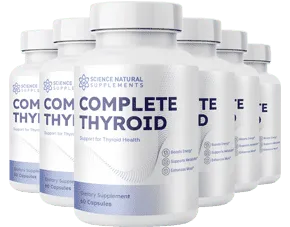
Complete Thyroid Ingredient Safety Profile — Dosages vs Upper Tolerable Limits
| Ingredient | Dose in Formula | Upper Tolerable Limit (UL) | Safety Status |
|---|---|---|---|
| Selenium | 200 mcg | 400 mcg/day | Within limit |
| Iodine | 150 mcg | 1,100 mcg/day | Well within limit |
| L-Tyrosine | 500 mg | No established UL | Safe at this dose |
| Ashwagandha | 300 mg | No established UL | Monitor liver if >12 weeks |
| Zinc | 15 mg | 40 mg/day | Within limit |
| Copper | 2 mg | 10 mg/day | Well within limit |
| Magnesium | 200 mg | 350 mg/day (supplemental) | Within limit |
| Bladderwrack | 200 mg | No established UL | Iodine variability — monitor |
| Vitamin B12 | 500 mcg | No established UL | Extremely safe |
No ingredient in Complete Thyroid exceeds established upper tolerable intake limits for healthy adults. However, individuals with autoimmune thyroid conditions, liver disease, or those taking thyroid medication (levothyroxine, Synthroid, Armour Thyroid) should consult a healthcare provider before use.
What Is Missing From the Complete Thyroid Formula — And What You May Need Separately
Complete Thyroid is a focused mineral-and-adaptogen formula. It intentionally excludes several nutrients that some thyroid patients may need. Here's what's absent and whether you should consider adding it from another source:
⚠ Vitamin D
Low vitamin D correlates strongly with Hashimoto's and hypothyroidism. Complete Thyroid excludes it — likely to avoid overdosing users who already supplement. Get your levels tested (25-hydroxyvitamin D); most adults benefit from 2,000–4,000 IU daily.
⚠ Iron
Iron is required for thyroid peroxidase (TPO) enzyme function. It is excluded because iron supplementation requires blood testing first — excess iron causes serious toxicity. Never supplement iron without a ferritin test from your doctor.
⚠ Probiotics
Approximately 20% of T4-to-T3 conversion occurs in the gut. Dysbiosis impairs this process. A quality probiotic with Lactobacillus and Bifidobacterium strains may complement Complete Thyroid for users with digestive symptoms.
⚠ Omega-3 Fatty Acids
Omega-3s reduce systemic inflammation and support cell membrane integrity, both relevant to thyroid function. Effective doses (1,000+ mg EPA/DHA) require large softgels — impractical within this capsule format. Pair with fish oil or algae oil.
⚠ Full B-Complex
The formula includes B12 but omits B1, B2, B6, and folate. These B vitamins support energy metabolism and nervous system function. A separate B-complex can fill this gap, especially for users with fatigue or neurological symptoms.
⚠ Calcium
Calcium directly interferes with thyroid medication absorption. Its exclusion protects users on levothyroxine or Synthroid. If you need calcium, take it at least 4 hours apart from any thyroid supplement or medication.
The takeaway: Complete Thyroid is built as a targeted thyroid support formula, not a comprehensive multivitamin. Users with diagnosed thyroid conditions should work with their healthcare provider to identify additional nutrients based on individual lab results. Always consult your doctor before combining supplements with prescription thyroid medication.
Try Every Ingredient Risk-Free — 180-Day Money-Back Guarantee

Science Natural Supplements stands behind every ingredient in Complete Thyroid with a 180-day money-back promise. Test the full formula for up to 6 months. If the ingredients don't deliver noticeable improvements in energy, metabolism, or mental clarity — return any unused bottles for a complete refund.
Contact support at [email protected] or call 1-888-861-2035. Purchase exclusively through the official website for authenticity and full guarantee eligibility.
Limited Time Special Pricing — Act Now!
This Special Discount and Free Shipping & Handling Are Only Available for a Limited Time
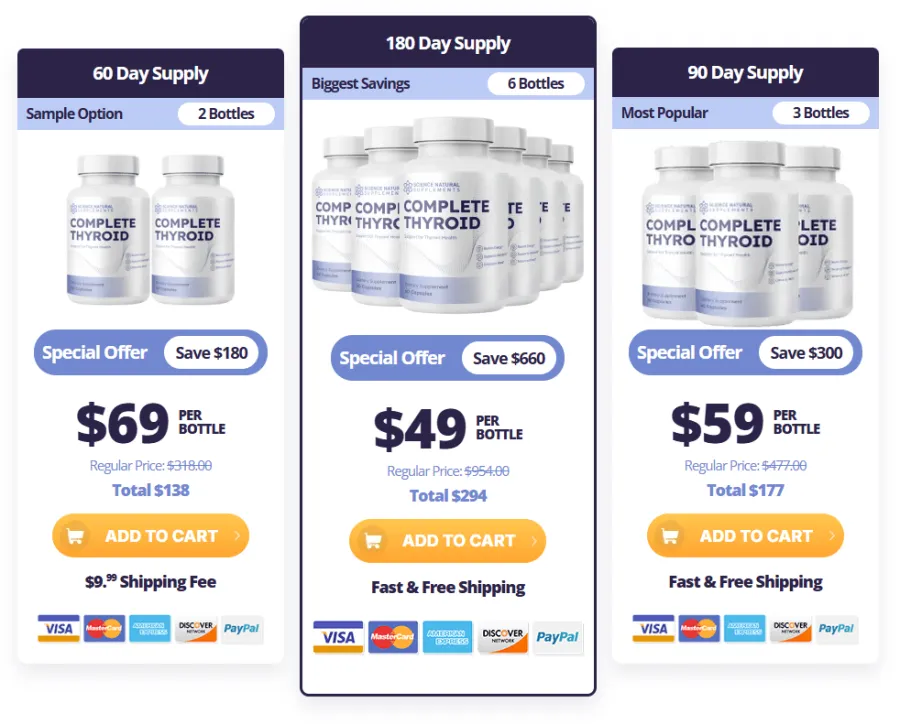
Free Shipping • 180-Day Guarantee • Secure Checkout